Nameservers are important in the internet world because they connect domain names to their related websites. Every time you type a web address (such as www.shostguide.com) into your browser, a nameserver discreetly works behind the scenes to route your request to the relevant server where the website is hosted. Without nameservers, you’d have to remember long strings of numbers (IP addresses) for each website you visit, which is quite inconvenient. This article provides an in-depth look at what nameservers are, how they work, and why they are crucial for the internet’s functionality.

What Are Nameservers?
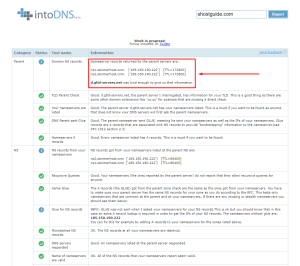
A nameserver is a specialized server that manages the connection between domain names (such as shostguide.com) and IP addresses (such as 185.150.190.222). Its primary function is to convert a user-friendly domain name into the numeric IP address required to discover and access a website via the internet.
Nameservers are part of the Domain Name System (DNS), also known as the “phonebook” of the internet. DNS guarantees that when you enter a domain name into your browser, it identifies the appropriate server to deliver the website’s content.
In simpler terms:
- Domain name: The human-readable address (e.g., shostguide.com).
- IP address: The machine-readable location (e.g., 185.150.190.222) that directs you to the right server.
How Do Nameservers Work?
Here’s a basic breakdown of how nameservers operate when you try to access a website:
- You type a domain name (e.g., www.shostguide.com) into your browser.
- The browser sends a DNS query to find the IP address of the domain by asking the appropriate nameserver.
- Nameservers respond with the IP address corresponding to the domain name, which the browser can use to locate the website.
- Your browser connects to the server at the IP address provided, and the website loads.
This process happens so quickly that users usually don’t notice it. Behind the scenes, multiple DNS queries can occur, passing through various DNS servers (like root servers and TLD servers) before reaching the correct nameserver that holds the information for the domain.
Types of Nameservers
There are two primary types of nameservers: authoritative nameservers and recursive resolvers. Each plays a specific role in the DNS lookup process.
1. Authoritative Nameservers
An authoritative nameserver holds the DNS records for a specific domain. When you register a domain name, the DNS records are stored on the authoritative nameserver. This is the final stop in the DNS lookup process, where the actual IP address or other DNS records are provided.
For example, if you own shostguide.com, the authoritative nameserver will store all the DNS information related to that domain, including the IP addresses of your website, email server details (MX records), and more.
2. Recursive Resolvers
A recursive resolver acts as a middleman between the user and the authoritative nameserver. It doesn’t store DNS records itself but instead queries authoritative nameservers on behalf of the user to find the required IP address.
When you enter a domain name, the recursive resolver fetches the IP address by querying the necessary DNS servers, including root servers and TLD servers, before reaching the authoritative nameserver. It caches the results to speed up future requests.
Why Are Nameservers Important?
Nameservers are a fundamental part of how the internet functions. They provide several critical services:
- User-Friendliness: Nameservers allow people to use easy-to-remember domain names rather than complex IP addresses to access websites.
- Efficient Routing: By directing queries to the appropriate servers, nameservers enable efficient routing of internet traffic.
- Decentralization: DNS and nameservers distribute responsibility across multiple servers worldwide, reducing the risk of bottlenecks or failures.
- Customization: Nameservers also give domain owners control over where their domain points. For example, by changing nameservers, a website owner can move their website to a new hosting provider without changing the domain name.
How to Configure Nameservers for a Domain
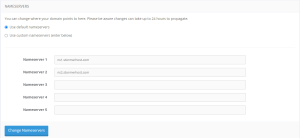
When you register a domain, you typically need to point the domain to the nameservers provided by your hosting provider. These nameservers are responsible for translating your domain name into the server’s IP address where your website is hosted.
To configure nameservers:
- Log in to your domain registrar (the service where you registered your domain).
- Locate the domain management area and find the option to set or change nameservers.
- Enter the nameservers provided by your web hosting provider, which often look something like
ns1.stormerhost.comandns2.stormerhost.com. - Save the changes and allow up to 24-48 hours for the new nameserver settings to propagate across the internet.
Common Nameserver Errors and Troubleshooting
Several issues can arise related to nameservers, causing websites to be inaccessible or slow to load. Here are some common problems:
- Incorrect Nameserver Configuration: If your domain is not pointing to the correct nameservers, users won’t be able to reach your website. Double-check the nameservers listed in your domain registrar’s settings.
- DNS Propagation Delay: When you change nameservers, the DNS changes need time to propagate globally. During this time (usually 24-48 hours), some users may not be able to access your site.
- Timeout or Slow Response: A nameserver might take too long to respond, causing slow loading times for websites. This could be due to high traffic, network issues, or misconfigurations.
- Missing DNS Records: If a nameserver doesn’t have the correct DNS records (such as A records or MX records), users might experience difficulties reaching your site or sending emails.
